3 Spin-offs that Will Benefit from a Trump Presidency
If you are on Twitter/X, I’m sure you’ve seen the “election cheat sheets.”
Here’s one from Wolfe Research:
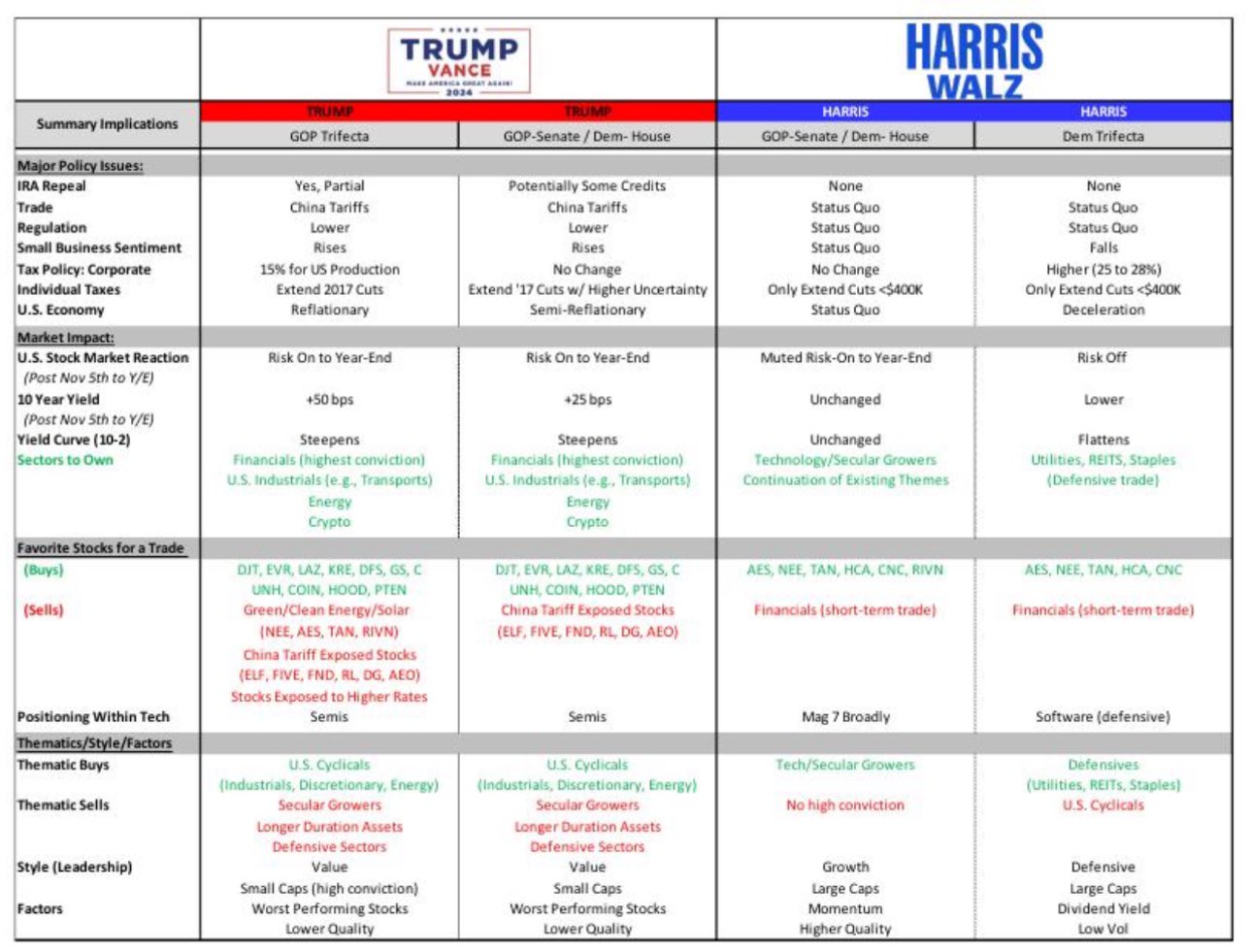
One theme that I didn’t see mentioned on many “cheat sheets” was Mergers and Acquisitions
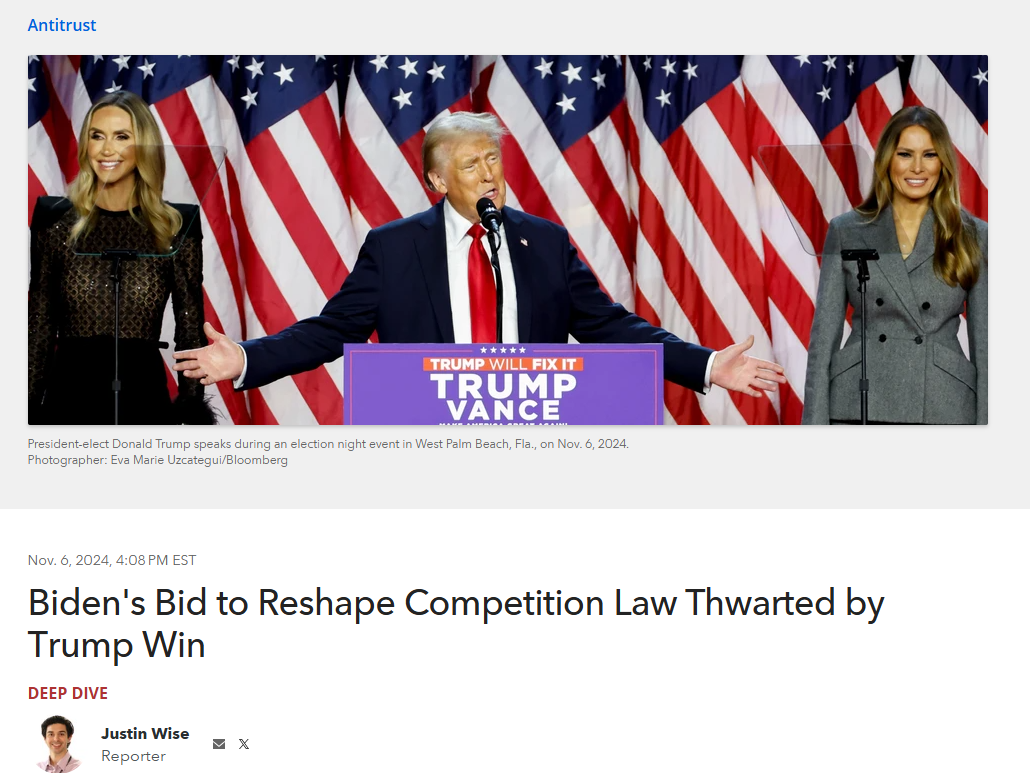
Federal Trade Commission Chair Lina Khan has been notoriously stingy about approving acquisitions.
It is widely expected that Trump will replace Lina Khan with a more business friendly chair.
When I think of spin-offs that could benefit from a more benign M&A regulatory environment, 3 stocks come to mind.
Enhabit Corporation (EHAB)
Enhabit has been on my watch list since it was spun out of Encompass over two years ago.
And it has always been intriguing….
Most spin-offs are focused on industries in secular decline, but the nice thing about Enhabit is that it is focused on home health and hospice, industries experiencing secular growth.
The main bull case for EHAB has always been that it is going to get taken out. All other public home health peers have gotten acquired.
- UNH bought LHC Group for 21x EBITDA.
- There was a bidding war for the only other publicly traded home health business (besides Enhabit), Amedisys. UNH has agreed to acquire the company at 14.1x EBITDA. It has been tied up by the justice department and FTC for over a year.
- In 2022, private equity firms, Advent International and Bain Capital, were rumored to be interested in buying Enhabit.
EHAB is currently trading at 9.3x NTM EBITDA.
If EHAB were to be acquired, it would probably be taken out at 13x EBITDA or more. Given how leveraged the company is, that would result in a share price of ~$16.50, over 100% upside from where the stock trades today.
Howard Hughes (HHH)
Howard Hughes Corporation (HHH) spun off Seaport Entertainment Group (SEG) on July 31, 2024
In spinning off Seaport Entertainment, Howard Hughes got rid of a loss making, non-core business and in doing so, became a pure play Master Planned Communities company.
A master-planned community is a large-scale, integrated development designed with a comprehensive plan that addresses a range of needs and amenities for its residents.
Howard Hughes has developed MPC’s in 7 communities.
A MPC is usually started and planned by a developer who buys a ton of land. Over time, the developer (in this case Howard Hughes) sells off its residential land over time to home builders so that homes can be built.
Howard Hughes has sold significant land over time but still owns 36,000 acres (the company values its remaining land at $3.9BN).
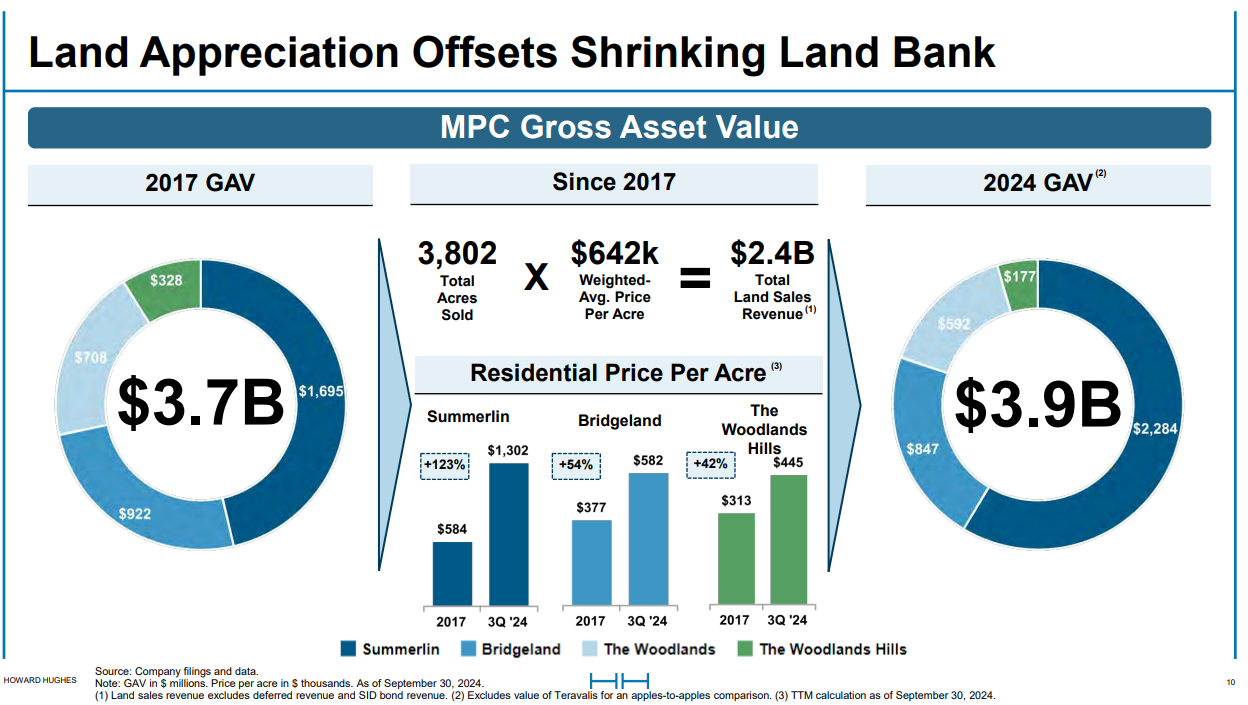
Howard Hughes’ strategy has been to sell off its residential acres over time to homebuilders, but it plans to keep most of its commercial land. It will sell off some of its commercial land to developers that plan to build churches, schools, community centers, hospitals, etc (projects that are important for communities but not an area of focus for HHH).
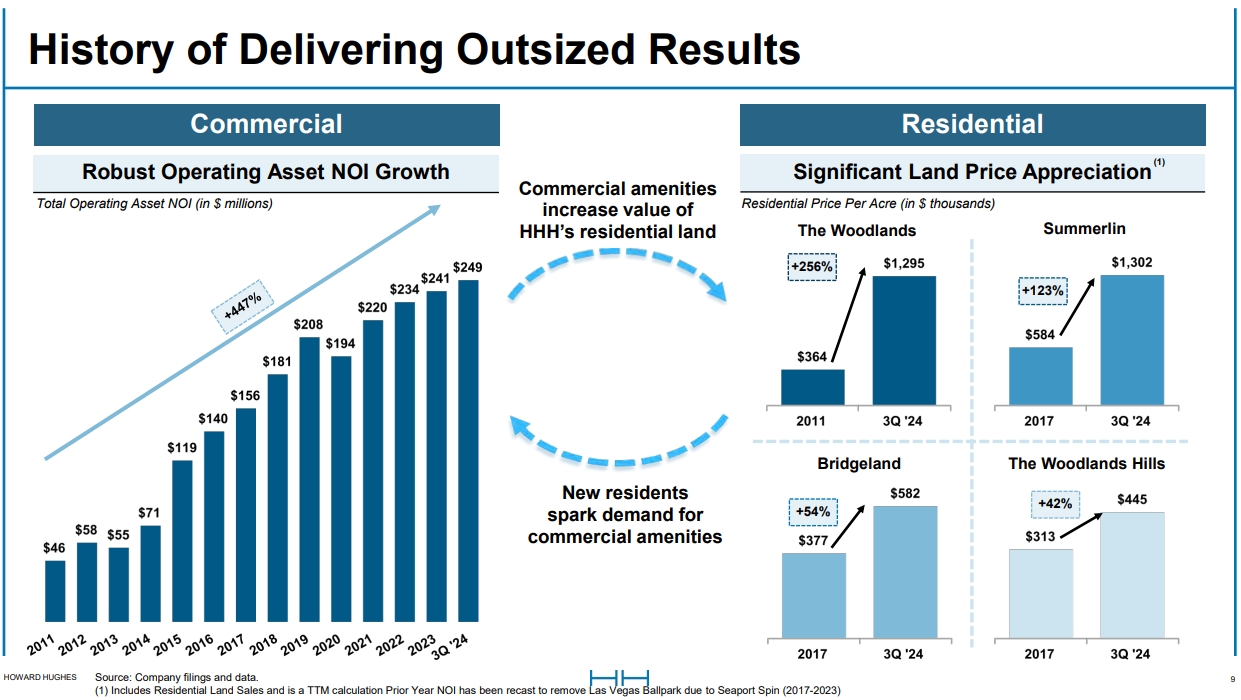
Howard Hughes plans to keep most of its commercial land to develop retail, multi-family, and office properties. It uses land sales to fund these development projects.
NOI from these projects has grown nicely over time and will continue to grow.
Howard Hughes’ NAV is likely north of $100/share but the stock trades at ~$82.
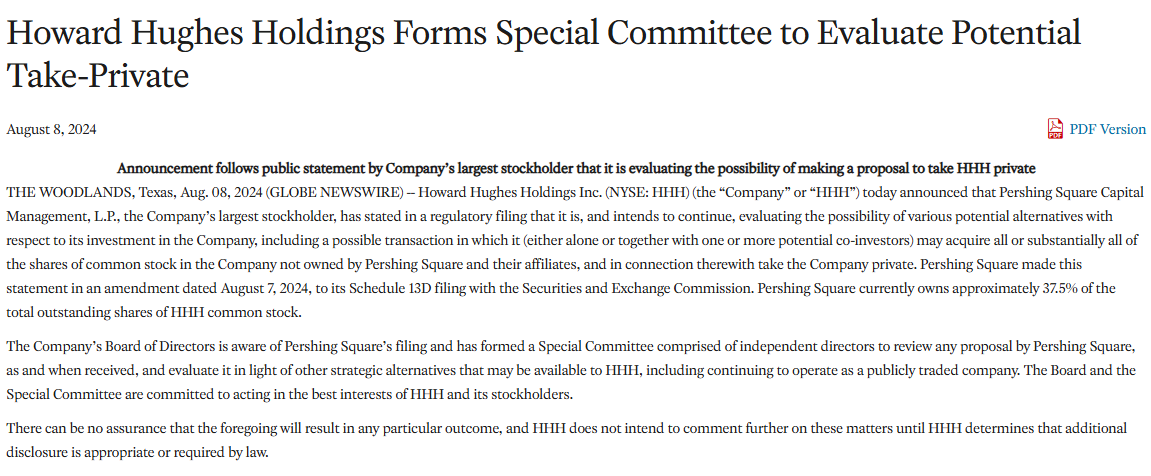
Better yet, Bill Ackman is considering taking the company private.
Zimvie (ZIMV)
Zimvie was a 2022 spin-off from Zimmer Biomet (ZMH).
At the time of the spin-off, Zimvie had a spine business ($540MM of revenue) and a dental business ($469MM of revenue).
In 2024, Zimvie closed the sale of its spine business in 2024 and is now a pure play dental company.
According to the press, it has hired advisors to evaluate strategic alternatives.
If Zimvie were to get acquired, there would be significant upside.
Zimvie is currently trading 8.8x EBITDA.
Publicly traded dental companies trade at ~12x EBITDA.
Assuming a 12x takeout multiple, Zimvie would be worth ~$22, over 50% about Zimvie’s current share price.
Concluding Thoughts
While all three names have significant upside potential in a takeout scenario, I only own Howard Hughes (HHH).
Why?
Howard Hughes’ fundamentals are excellent. The company is delivering record results. A takeout would be nice, but in the meantime, we can rely on excellent results to continue to drive the stock price higher.
I’m going to continue to keep a close eye on Enhabit and Zimvie.
With Enhabit, I’m concerned with shrinking Medicare fee-for-service enrollment. It is more profitable than Medicare Advantage and has been declining consistently since the time of the spin-off, providing a tough mix shift.
With Zimvie, fundamentals in the dental market seem weak. In the most recent quarter, sales declined 2% y/y. There are signs that Zimvie’s US market is going to return to growth, but for now, I’m content to watch the company’s progress from the sidelines.
What spin-offs do you think are acquisition candidates?


Hola, tanto Enhabit como Zimvie en la medida que esten intervenidas o subvencionadas por el estado no creo que sean motivo de deseo hasta el punto de querer ser adquiridas si no es por alguna empresa que pueda aprovechar las posibles sinergias en su sector ya sea para crear escala o para eliminar competencia, si este fuese el caso podria ser una buena oportunidad tanto para una como para la otra